Building a great product is not enough
Many early-stage founders spend months refining their product.
But there’s one core reality that should not be forgotten: a great product without customers is not a business.
That is why a go-to-market (GTM) strategy is critical, understanding who your customer is, how to reach them, and why they should choose you.
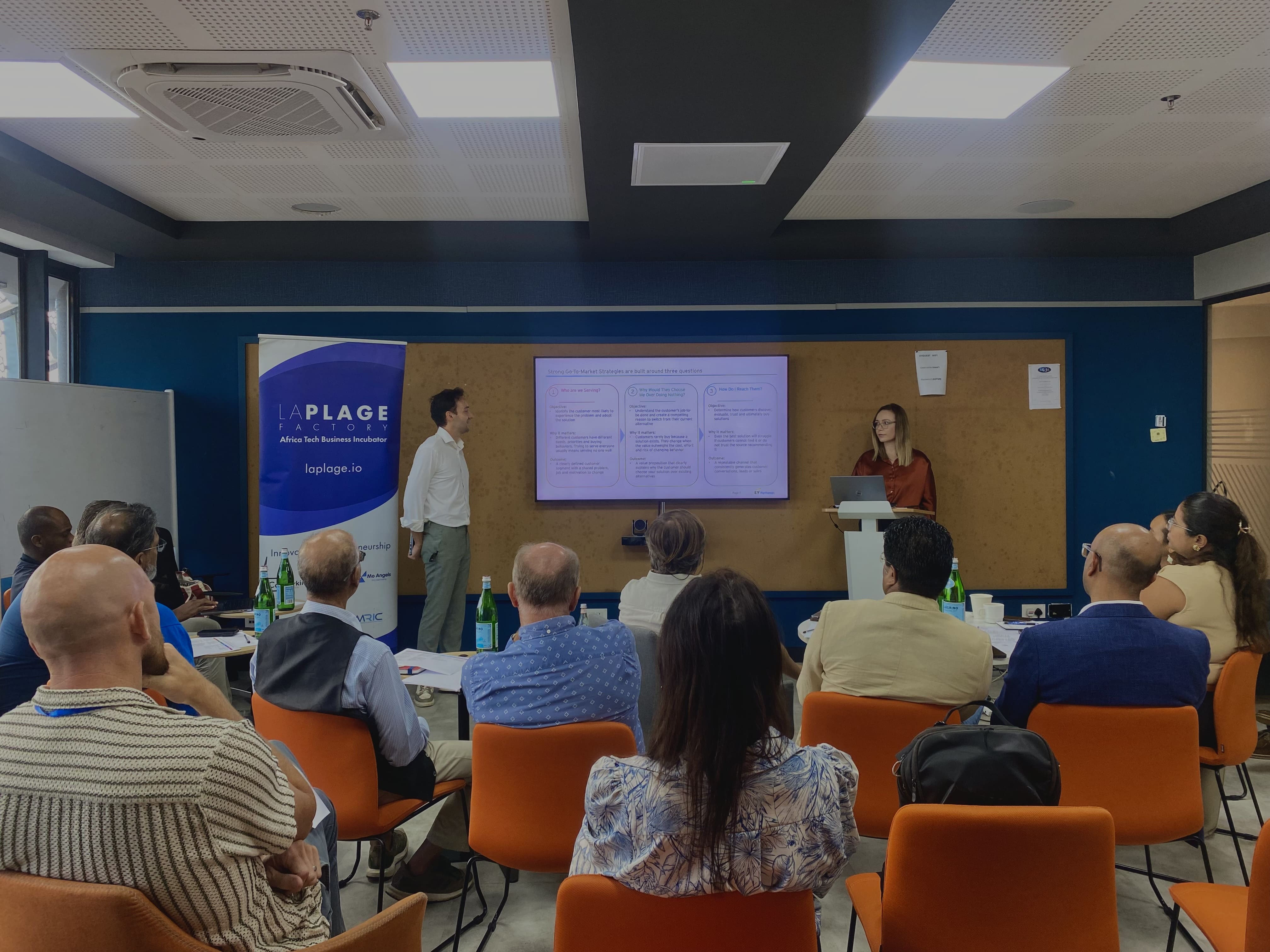
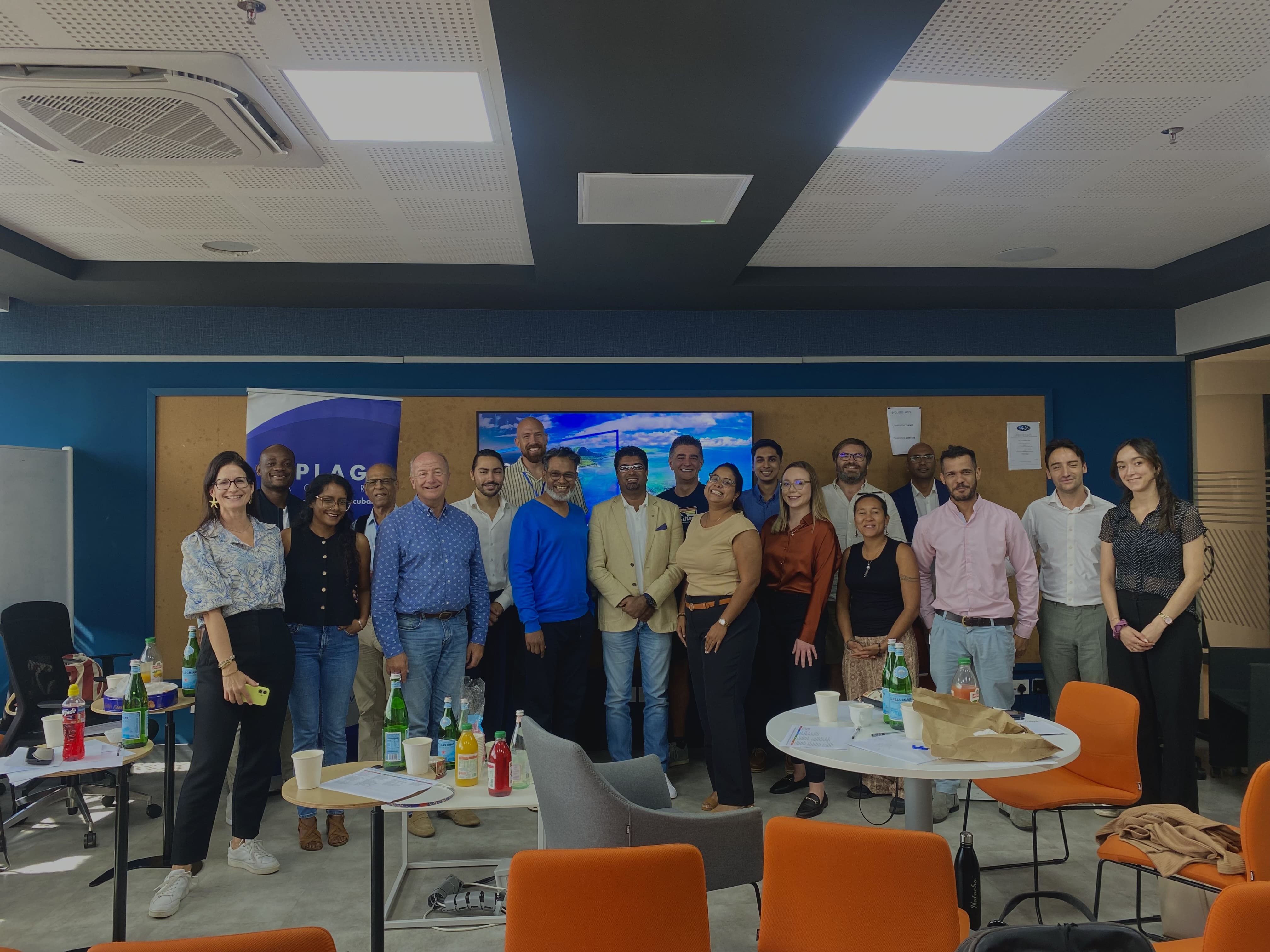
At La Plage Factory, we recently hosted a masterclass delivered with EY Parthenon, as part of our G&I Punch 2026 incubation programme.
So, what did we learn? Here are the key takeaways.
Key insights from the session
1. Structuring a Go-to-Market Strategy
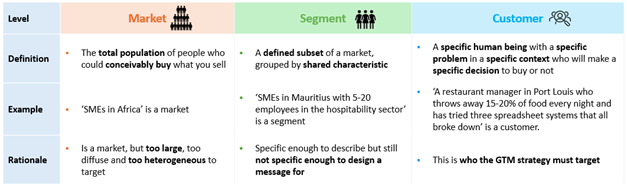
A go-to-market strategy is often misunderstood as a marketing or sales exercise. In practice, it sits at the core of the business model. It defines who the startup is for, what problem it solves, and how that value reaches the market.
During the session, founders were encouraged to move beyond broad assumptions and focus on identifying specific customer segments with clearly defined needs. Precision, rather than scale, was presented as the starting point for effective execution.
Customer validation emerged as a central theme. Rather than relying on intuition, founders were guided to engage directly with potential customers through structured interviews and research. These conversations are not about confirming ideas, but about testing them. They help uncover real pain points, challenge assumptions, and ensure the solution addresses a genuine need.

“The starting point of a strong go-to-market strategy is not the size of the market, but the precision with which you understand the customer, their problem, and the context in which they make decisions.
(Rayan Delacroix, EY-Parthenon)
2. Customer Validation through Research
Validation was positioned as a continuous and structured process embedded within the go-to-market approach.
Founders explored how to conduct effective customer interviews, focusing on listening rather than leading, and distinguishing between assumptions and evidence. The session highlighted that understanding what customers do, not just what they say, is critical to building relevant solutions.
This approach allows startups to refine their direction early, reduce uncertainty, and build solutions that are closely aligned with real user behaviour and expectations.
3. Clarifying the Value Proposition
A strong value proposition is one that a customer immediately understands and relates to. It connects directly to their situation, their friction, and the outcome they want to achieve.
The masterclass emphasised the importance of framing solutions in customer-centric language. Founders were encouraged to align their offering with the customer’s job, pain, and desired outcome, rather than focusing on features alone.
Clarity and simplicity were highlighted as essential to gaining early traction: while founders often speak in terms of solutions, customers speak in terms of problems. A strong message must therefore translate the offer into the customer’s own language, making the value instantly understandable and relevant.

“Customers do not respond to features alone. They respond when the message reflects a problem they already feel and an outcome they genuinely want.”
(Sohail Damree, EY-Parthenon)
4. Choosing the Right Channels and Building Trust
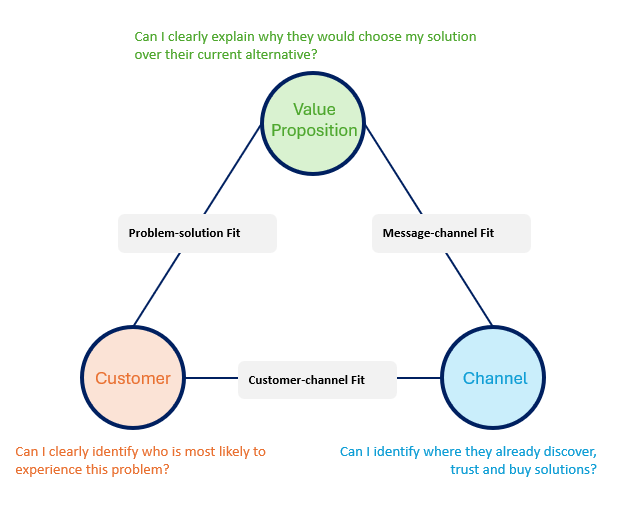
Once the value proposition is clearly defined, the next challenge is access.
Choosing the right distribution channels is less about preference and more about behaviour and trust.
Founders were encouraged to ask key questions:
- Where do customers already look for solutions?
- Who do they trust?
- What influences their decisions?
- How do they buy?
Through concrete examples, including insights from successful African startups like Twiga, which built traction by engaging directly with informal market vendors before expanding regionally, the session illustrated how effective channel selection can significantly accelerate traction when grounded in real customer behaviour and existing trust dynamics.

“Trust often comes before scale. The most effective channels are built by understanding where customers feel confident enough to act.”
(Megan Ryan, EY-Parthenon)
5. Iteration and Feedback Loops
Every go-to-market strategy begins as a set of hypotheses. The role of the founder is to test them quickly.
The masterclass highlighted the importance of iterative validation: piloting ideas, collecting feedback, and refining continuously. Participants were encouraged to approach customer conversations with openness rather than confirmation, remaining aware of potential founder bias.
This continuous loop of testing and learning enables startups to adapt quickly and strengthen their market fit over time.
6. Scaling through Repeatability
Scaling is not the starting point, it is the result.
Before expanding, startups must demonstrate that they can consistently reach a specific customer, solve a meaningful problem, and create value. This often begins with a narrow segment, sometimes described as a “wedge”, where the model can be effectively proven.
Only once repeatability is established across key dimensions, such as customer demand, channel performance, conversion patterns, or value creation, should founders consider expanding to new segments, geographies, or product lines. This disciplined approach ensures that growth is built on solid foundations rather than assumptions.

“Startups earn the right to scale by proving repeatability before expanding ambition.”
(Julien David Mousseau, EY-Parthenon)
We hope that readers enjoyed the insights from this Masterclass and these will support you in building your own Go-to-Market Strategies!
Strengthening the Startup Ecosystem Together
This masterclass reflects the strength of collaboration between LPF and its partners. By working with organisations such as EY Parthenon, we ensure our founders benefit from structured expertise and practical frameworks to accelerate their growth.
We would like to thank EY Parthenon for this valuable session and for their commitment to supporting entrepreneurs. Thanks to this session, founders are now better equipped to define their first customers, test their core assumptions, and build a more repeatable go-to-market approach.
As our G&I Punch 2026 cohort, supported by MCB Punch, progresses through the incubation programme, sessions like this play a key role in transforming ideas into structured, validated, and scalable ventures.
At La Plage Factory, we remain committed to placing founders at the centre while strengthening our role as a leading Tech4Good incubator in Mauritius and across Africa.
Related

What will the future of AI- powered entrepreneurship look like in Mauritius?

Turn Your Innovation Into Growth
